
- This event has passed.
Realizing Buddhahood in the Human Realm: The Theory and Practice of Humanistic Buddhism
4. Feb 2026 @ 14:00 - 16:00
Event Navigation
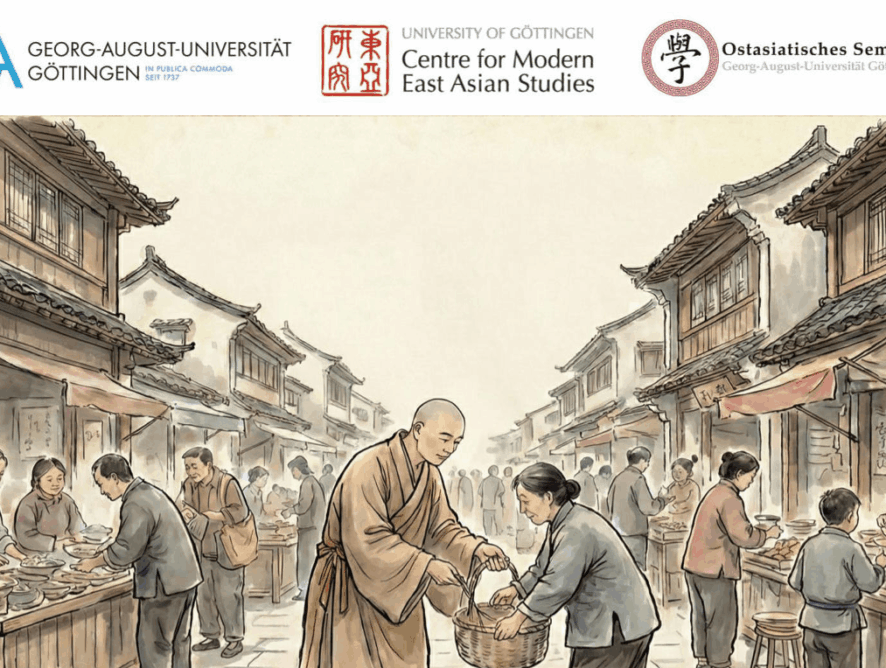
Realizing Buddhahood in the Human Realm:
The Theory and Practice of Humanistic Buddhism
Lecture Series: Buddhism in Modern China 2025/2026
Prof. Dr. 宣方 Xuan Fang (Renmin University of China)
Time: February 4, 2026, 14:00 PM – 16:00 PM CET
Venue: Raum 4.105, Waldweg
Language: Chinese/ 中文
Abstract
即人成佛:人间佛教的理论与实践
摘要
人生佛教作为汉传佛教回应现代性议题最重要的理论论述和实践模式,对二十世纪后半叶以来佛教在海峡两岸的蓬勃发展居功至伟,引起学界广泛的关注,相关研究持续升温,本世纪以来渐成显学,成果卓有可观。不过,此中仍有未发之覆,特别是一些基础的教理问题,对佛教共同体内部而言十分重要。例如,太虚关于人间佛教诸多论述引发后人大相径庭的理解,人间佛教推展过程中的种种歧出也使其备受争议。回归到基础教理层面来分析,争议的焦点集中在两个方面:第一、人生佛教思想的核心理论、宗旨及其性质是什么?是共世间的人天乘法门,还是大乘的菩萨道?第二、人生佛教如何修行?是由人、天、声闻、菩萨层层转进,还是由人乘直达佛乘?人菩萨行是否可能、如何可能?前一方面要回答人生佛教是什么,后一方面要回答人生佛教怎么修,这两个基础教理问题相互关联,是人生佛教的核心理论和立论根本;尤其是第二个问题,仍属学术界既往研究的未发之覆。人生佛教能否在教理上自洽地解答上述问题、回应各种质疑?本讲演将依据太虚、印顺的相关论述,对此作一考察。
Humanistic Buddhism (rensheng fojiao) represents one of the most significant theoretical articulations and practical models through which Chinese Buddhism has responded to the challenges of modernity. Since the second half of the twentieth century, it has played a crucial role in the remarkable revival and expansion of Buddhism in both Mainland China and Taiwan. As a result, it has attracted sustained scholarly attention since the beginning of the twenty-first century.
Nevertheless, important issues remain insufficiently examined, particularly certain foundational doctrinal questions that are of great significance within the Buddhist community itself. For example, Taixu’s various interpretations of Humanistic Buddhism (renjian fojiao) gave rise to markedly divergent understandings among later generations, while differing paths of practical implementation have rendered the movement highly contested. When these debates are reconsidered at the level of fundamental doctrine, they converge on two central issues: First, what are the core theoretical foundation, ultimate aim, and doctrinal nature of Humanistic Buddhism? Should it be understood as a form of this-worldly Buddhist practice oriented toward the human and celestial vehicles, or as an expression of the Mahāyāna bodhisattva path? Second, how is Humanistic Buddhism to be practiced? Does cultivation proceed step by step—from the realms of human and celestial beings, through the śrāvaka path, and onward to the bodhisattva path—or does it advocate a direct transition from the human vehicle to Buddhahood? Is the practice of the “human bodhisattva” theoretically possible, and if so, in what sense? The first question concerns what Humanistic Buddhism is, while the second addresses how it is to be practiced. These two fundamental doctrinal issues are closely interconnected and together constitute the core theoretical framework and justificatory basis of Humanistic Buddhism. In particular, the second issue remains largely unexplored in existing scholarship.
Can Humanistic Buddhism provide a doctrinally coherent response to these questions and adequately address the various criticisms directed toward it? Drawing on the writings of Taixu and Yinshun, this lecture examines these issues from the perspective of Buddhist doctrinal theory.
【Short Bio】
宣方,中国人民大学宗教学系副教授,佛教与宗教学理论研究所研究员,兼任北京大学、香港中文大学、厦门大学、云南大学、中国佛教文化研究所等十余所国内佛学机构客座教授,《宗教》、《宗教研究》、《汉语佛学评论》等专业期刊编委。主要研究佛教思想史和当代佛教。
Xuan Fang is associate professor in the Department of Religious Studies at Renmin University of China and Research Fellow at the Institute for the Study of Buddhism and Religious Theory. He also serves as a visiting professor at more than ten Buddhist studies institutions in China, including Peking University, The Chinese University of Hong Kong, Xiamen University, Yunnan University, and the China Institute of Buddhist Culture. He is a member of the editorial boards of several leading academic journals, including Religion, Religious Studies, and Chinese Buddhist Studies Review. His main research interests focus on the intellectual history of Buddhism and contemporary Chinese Buddhism.